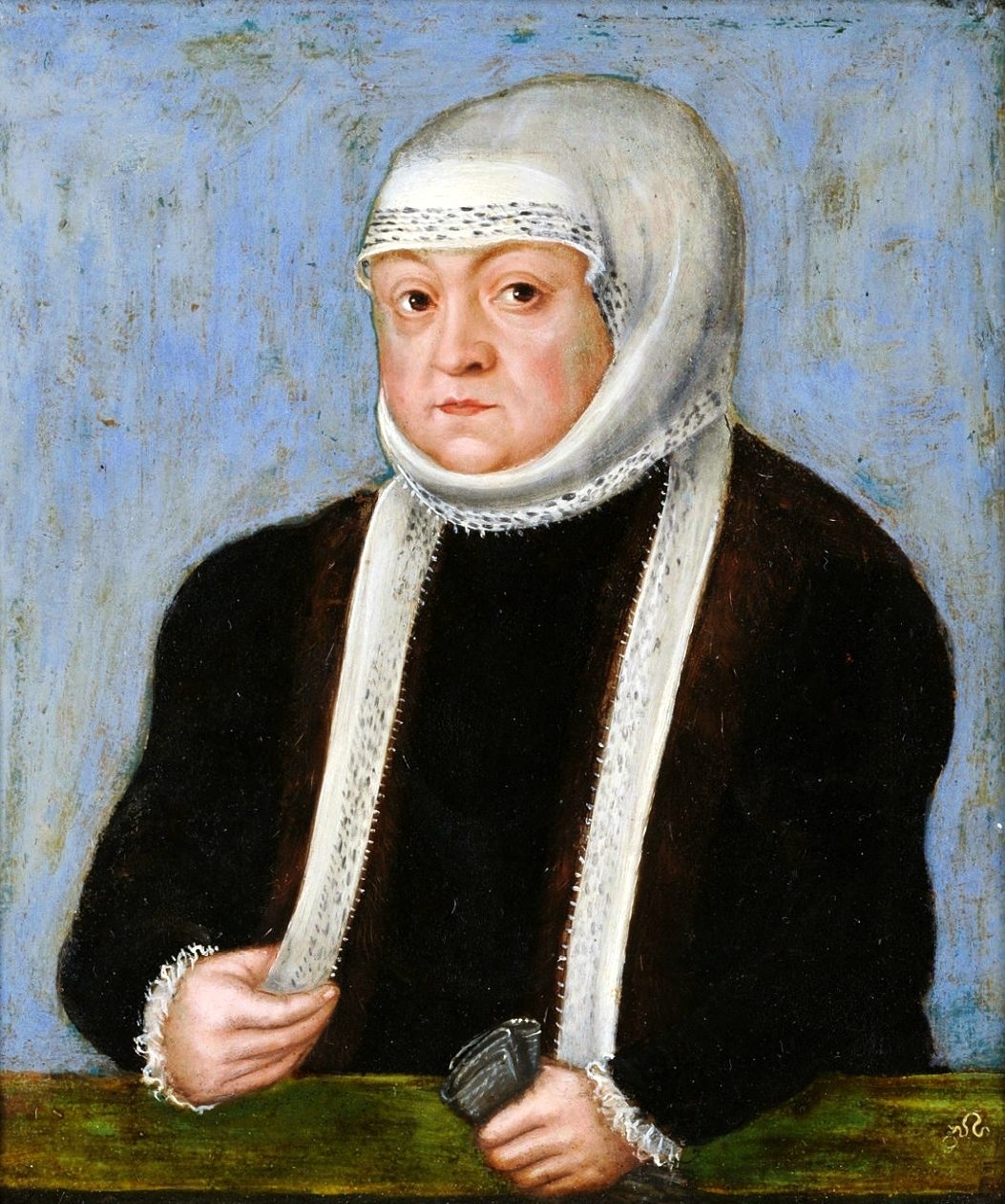
Bona Sforza's life connects two of the great courts of Renaissance Italy to the throne of Poland, a marriage that carried Italian art, learning and political habits north into a kingdom she would help shape for nearly forty years.
An Italian childhood marked by loss
Born in Vigevano on 2 February 1494, Bona Sforza d'Aragona descended from two of Italy's most prominent ruling families: the Sforza of Milan on her father's side and the Aragonese of Naples on her mother's. Her father, Duke Gian Galeazzo Sforza, died while she was a child, and the seizure of power in Milan by his uncle Ludovico il Moro forced her mother, Isabella of Aragon, to return to Naples. It was at the cultured Aragonese court there that Bona received a rich humanist education under scholars including Crisostomo Colonna, a member of the Accademia Pontaniana and an admirer of Petrarch, giving her a grounding in literature, philosophy and the arts characteristic of the Italian Renaissance at its height.
Queen consort of Poland
In 1518, at the age of 24, Bona married Sigismund I of Poland, a widower more than twenty-five years her senior, in a ceremony at Castel Capuano in Naples. She became queen consort of Poland and grand duchess consort of Lithuania, a position she held until Sigismund's death in 1548, and separately held the title of Duchess of Bari, inherited from her mother, from 1524.
An active queen
Bona proved to be far more than a ceremonial consort. At the Kraków court she actively promoted Italian Renaissance culture, and in matters of state she pursued clear political goals, including making the Duchy of Prussia a tributary of the Polish crown in 1525 and negotiating peace with the Ottoman Empire in 1533. Domestically, she built up substantial personal landholdings and worked to strengthen royal authority against the growing power of the Polish nobility, a policy that made her a divisive figure among the aristocracy she sought to contain.
Return to Bari and death
After 38 years in Poland, Bona left the kingdom in 1556, prompted by her opposition to the secret marriage of her son, King Sigismund II Augustus, to Barbara Radziwiłł. She returned to her inherited duchy of Bari, where she died on 19 November 1557. Suspicions of poisoning circulated at the time of her death, encouraged both by the general reputation for poisoning attached to Italian princely courts and by the unpopularity her policies had earned her among sections of the Polish nobility, though no conclusive evidence has ever confirmed the cause.
Legacy
Bona Sforza's nearly four decades on the Polish throne left a lasting Italian imprint on the Kraków court, in its art, its administration and its political culture, making her one of the clearest examples of how a single dynastic marriage could carry Renaissance Italy's influence deep into Central Europe.