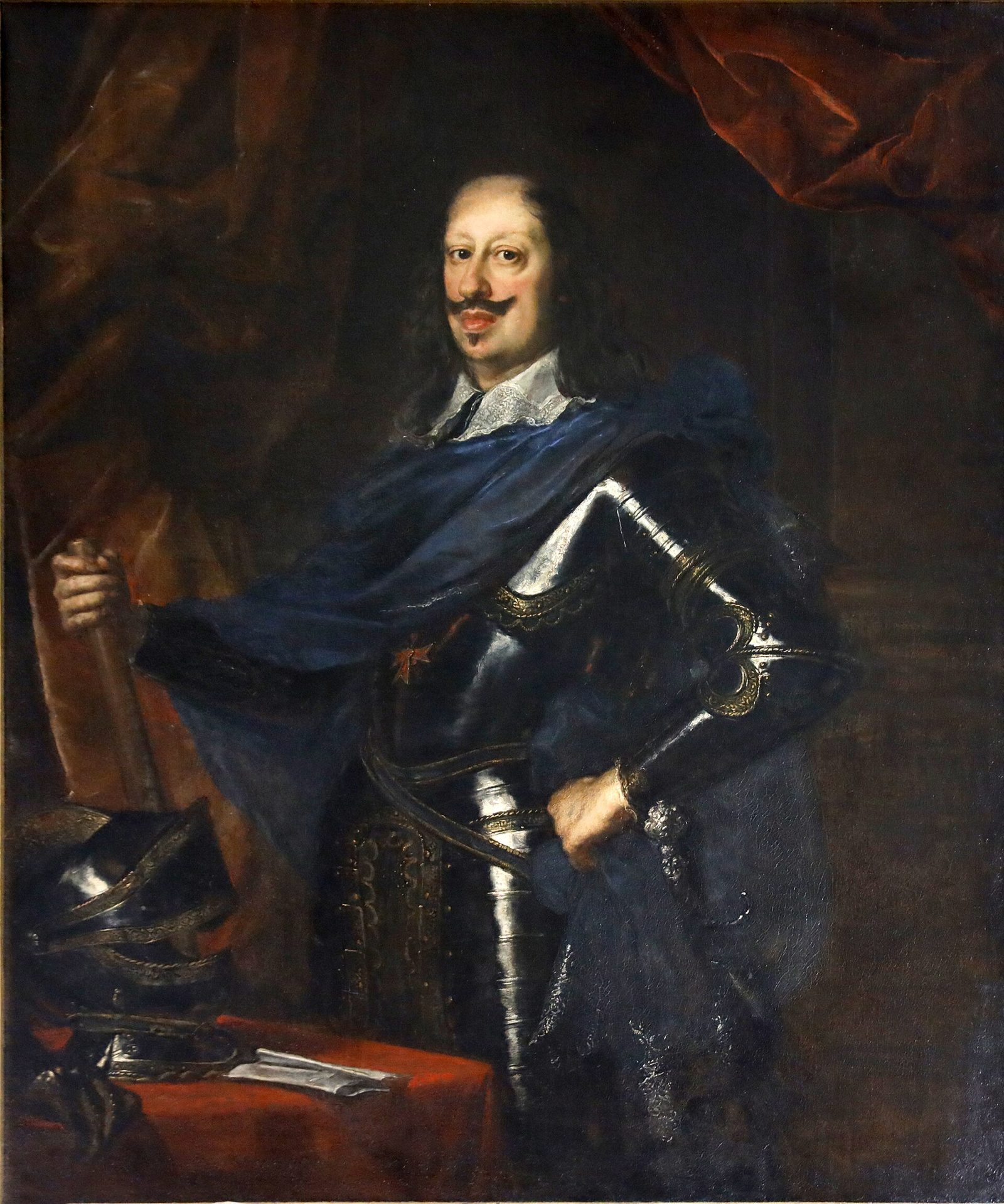
Ferdinando II de' Medici ruled as Grand Duke of Tuscany for nearly fifty years, from 1621 to 1670, a period that combined political and economic strain with a sustained investment in scientific research that left a lasting mark on Florence.
A regency, then a long reign
Born in Florence in 1610, Ferdinando was the son of Cosimo II de' Medici and Maria Maddalena of Austria. He came to the ducal throne at the age of eleven, following his father's early death, and the Grand Duchy was governed in his minority by his mother and his grandmother, Christina of Lorraine, acting as regents. Historians have generally judged their period of regency harshly, citing heavy spending and economic decline; Ferdinando took up personal rule once he came of age.
Plague, war and a difficult century
The seventeenth century brought recurrent crises to Tuscany. The plague of 1630 to 1633 killed roughly a tenth of the population of the Grand Duchy; unlike many nobles who withdrew from affected areas, Ferdinando is recorded as having personally taken part in relief efforts for the sick. The wider European wars of the period, while not fought directly on Tuscan soil, disrupted trade and strained ducal finances. Positioned between the major powers of Spain and, later, Austria, Ferdinando's Tuscany often had to trade political independence for stability and the preservation of its cultural standing.
Patron of Galileo and of experimental science
Despite these pressures, Ferdinando made Florence a European centre for the new experimental sciences. He supported Galileo Galilei both before and after the astronomer's 1633 trial by the Inquisition, working to secure conditions that let Galileo continue his research under restriction rather than in prison. Ferdinando founded his own Accademia Medicea Sperimentale in 1642, and in 1657 his brother, Cardinal Leopoldo de' Medici, founded the Accademia del Cimento with Ferdinando's backing – one of Europe's first scientific societies dedicated to experimental method, whose instruments survive today in Florence's Museo Galileo.
A patron of the arts
Ferdinando also continued the Medici tradition of art patronage, adding to the grand-ducal collections that now form the core of the Uffizi and Palazzo Pitti. His court drew artists, writers and musicians, reinforcing Florence's standing as a centre of learning and culture even as its political weight in Italy declined.
Legacy
Ferdinando II died in 1670 after 49 years as Grand Duke. His reign is remembered less for territorial or military achievement than for the scientific and artistic patronage that shaped Florence's institutions. The instruments of the Accademia del Cimento in the Museo Galileo, the collections of the Uffizi and Palazzo Pitti, and Galileo's own continued work at his villa in Arcetri all trace back to decisions made during Ferdinando's rule.