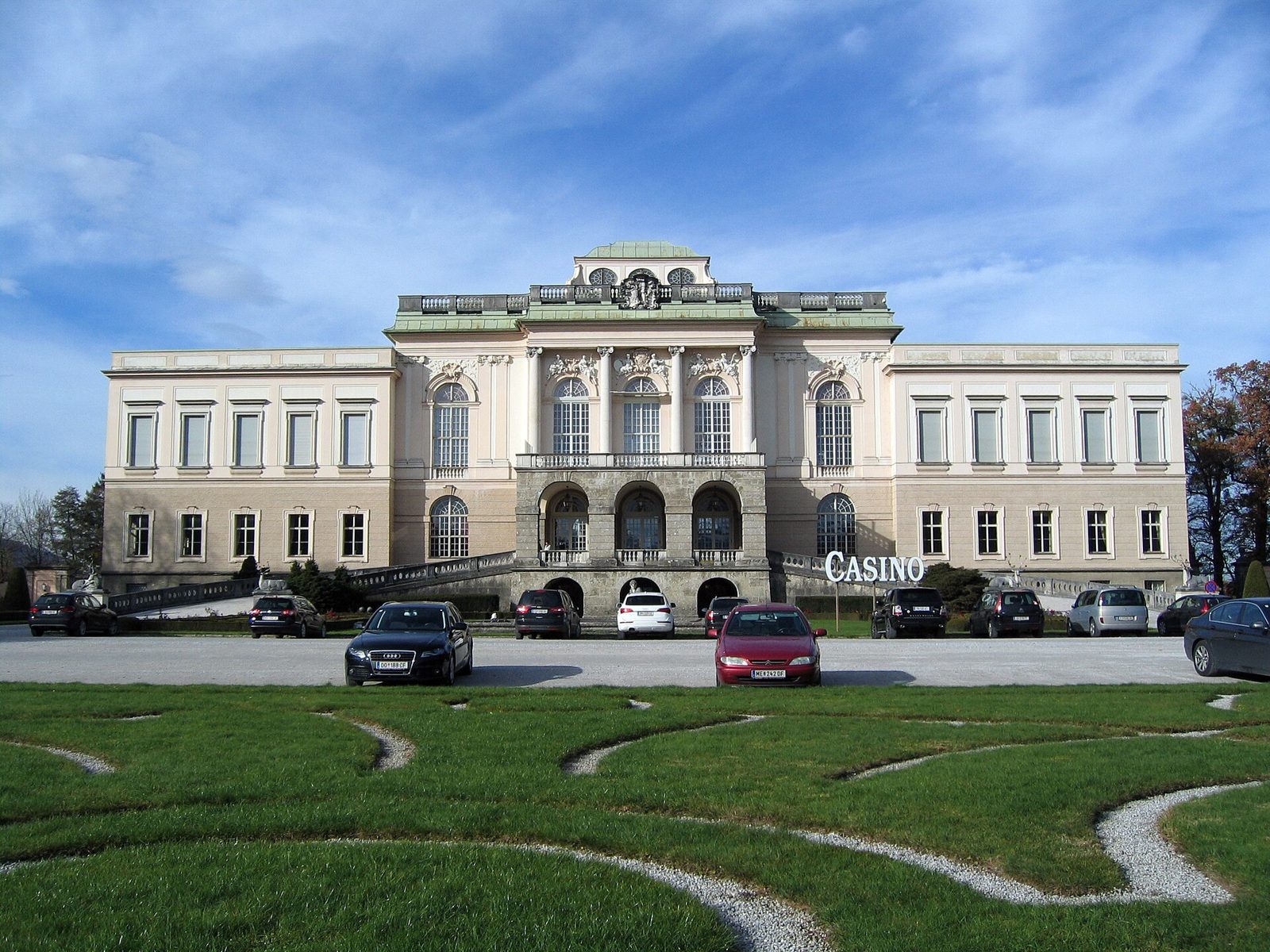
A few kilometres west of Salzburg's old town, Schloss Klessheim stands as one of the city's principal baroque palaces, its grounds and architecture the product of three centuries of use by prince-archbishops, an Austrian archduke, and, in its darkest chapter, the Nazi state.
Origins under the prince-archbishops
The palace grew out of a modest rural holding, the "Kleshof", acquired in 1690 by Johann Ernst von Thun, then prince-archbishop of Salzburg. Von Thun commissioned Johann Bernhard Fischer von Erlach, the leading architect of Austrian Baroque, to design a grand summer residence on the site, with work beginning around 1700. Von Thun's death in 1709 interrupted construction, and his successor chose to prioritise other projects, including Schloss Mirabell. It fell to a later prince-archbishop, Leopold Anton von Firmian, also responsible for Schloss Leopoldskron, to complete both the exterior structure and the interior decoration and gardens. Toward the end of the eighteenth century, Archbishop Hieronymus von Colloredo had the formal baroque gardens replanted in the more naturalistic English style then coming into fashion.
From archducal residence to state property
The secularisation of the archbishopric of Salzburg and the dissolution of the Holy Roman Empire in 1803 brought Klessheim into the possessions of the Habsburg dynasty. From 1866 it served as the permanent Salzburg residence of Archduke Ludwig Viktor, younger brother of Emperor Franz Joseph, who commissioned the architect Heinrich von Ferstel to add a winter palace alongside the existing building. In the 1920s the grounds hosted an English children's home and a dance school run by Elizabeth Duncan, which drew visitors including the writer James Joyce in 1928.
The Nazi period
After Austria's annexation by Nazi Germany in 1938, Klessheim was renovated for use in state functions and hosted diplomatic meetings involving senior figures of the Axis powers, including Benito Mussolini. Its proximity to Hitler's residence at the nearby Berghof gave it particular strategic importance during this period, one of the darker chapters in the building's long history.
Post-war restoration and the Salzburg Casino
After the Second World War, Klessheim underwent restoration and passed into the ownership of the state of Salzburg, which used it for a time as a state guesthouse. Since 1993 its historic rooms have housed the Salzburg Casino, and part of the complex is also used by a tourism college. The building today combines its Fischer von Erlach-era baroque architecture, later archducal additions by Ferstel, and the English-style landscaping introduced under Colloredo, giving visitors a layered record of Salzburg's ecclesiastical and dynastic history spanning more than three hundred years.
The palace's grounds, first laid out in the formal French manner and later reworked in the English landscape style, remain open around the building today, giving visitors a sense of the parkland that framed the residence through each phase of its history, from prince-archbishops to archduke to the Salzburg state.