From farmhouse to fortified borg
Verhildersum stands east of the village of Leens, in the Groningen region of the northern Netherlands. The estate began as a 'heerd', a farmhouse, in the fourteenth century, and only took on the formal fortified status of a borg in the early seventeenth century, decades after the original farmhouse was first recorded. Borgen in Groningen were more than residences: they combined defence, administration and estate management for the region's landowning families, in a province where such houses doubled as local centres of power, a role Groningen's borgen played long after comparable castles elsewhere in the Netherlands had lost their administrative functions.
Destroyed twice, rebuilt each time
The estate's early history was marked by conflict rather than settled prosperity. Records show it was destroyed by forces from the city of Groningen in both 1400 and 1514, and rebuilt afterwards at a cost of some 1,200 gold guilders. Early names associated with the property include Aylko Ferhildema, recorded in 1398, and members of the Onsta family, who held it through the sixteenth century; during the Eighty Years' War, occupants such as Ecke Claessen had to contend with billeted soldiers passing through the region, a burden shared by many rural estates in the northern Netherlands during that prolonged conflict.
The Tjarda van Starkenborgh family
The estate's most significant period of family continuity began when Hidde Onsta and her husband, Ludolf Tjarda van Starkenborgh, took up residence, establishing the property independently of the wider Onsta holdings. Their descendants accumulated further regional influence over succeeding generations through inherited church patronage rights and administrative office, and a large family portrait from 1670, measuring nearly four by three metres, still hangs in the borg today.
Decline, restoration and museum status
Verhildersum declined through the eighteenth century, with some wings demolished as the family's fortunes and the building's upkeep fell away. In 1821 the notary Hendrik van Bolhuis bought and restored the property. The municipality acquired the estate in 1953 and carried out a further professional restoration in 1956, work that put the borg on the footing it holds today as a museum, furnished largely in nineteenth-century style rather than restored to any single earlier period.
Verhildersum today
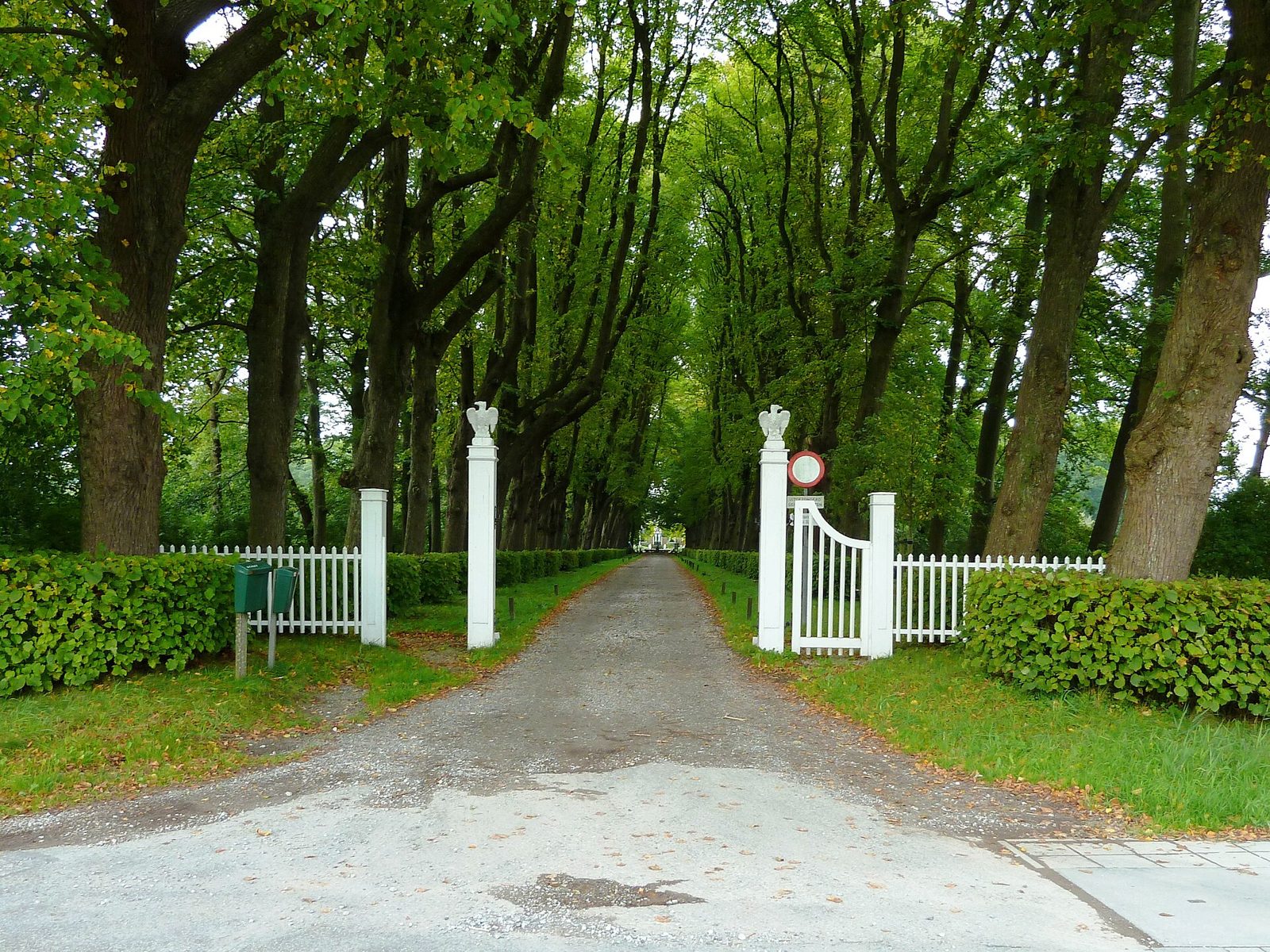
Today the 32-hectare estate combines the restored borg with baroque-inspired gardens laid out on golden-ratio proportions, including herb gardens, some ninety varieties of rose and around fifty types of Clematis, alongside historic outbuildings such as a museum farmhouse, a garden shed converted from a late-nineteenth-century tramhouse, and workers' cottages. Visitors can see the interiors as they were furnished in the nineteenth century, alongside the surrounding gardens and estate buildings that once supported the working farm, giving a fuller picture of a Groningen estate than the main house alone would provide.