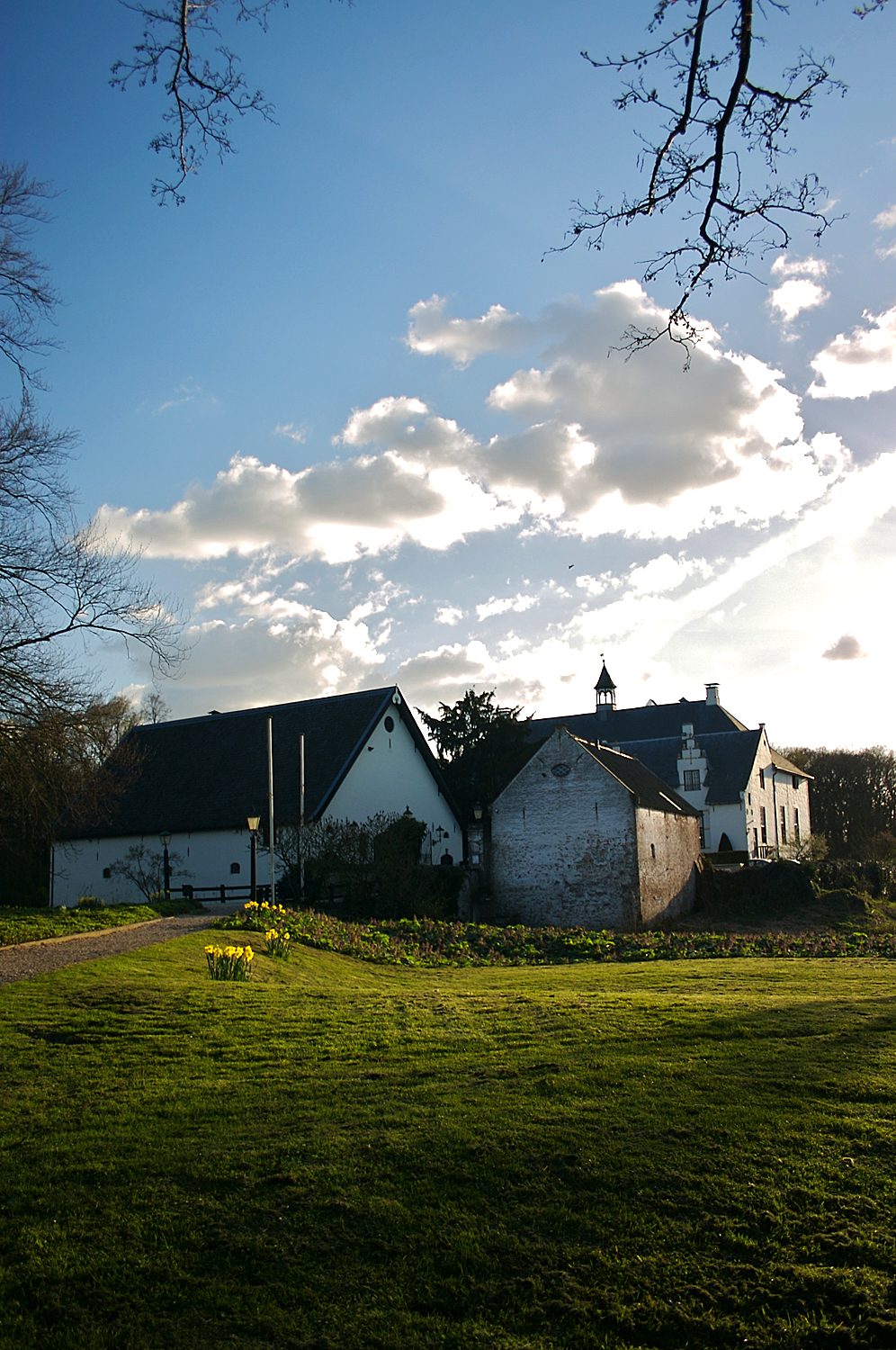
Slot Doddendael stands in wooded grounds near Ewijk, in the Dutch province of Gelderland, in the Land van Maas en Waal area between the rivers Maas and Waal. Its whitewashed main building is partly screened by trees, and its documented history reaches back to the fourteenth century, making it one of the older moated houses recorded in this stretch of the Dutch-German borderlands.
Origins in the fourteenth century
The estate is first traceable to 1332, when a local landholder, Robert van Appeltern, is recorded leasing the land. The name Doddendael appears in documents from 1379, and is generally thought to derive from the cattails, or 'lisdodden', common in the marshy surroundings, a naming pattern typical of low-lying Gelderland estates named for their immediate landscape. Ownership passed through several families over the following century, including the van Buren family and, around 1474, Jasper van Culemborg; defensive features were added to the house during this period as the wider region saw repeated conflict, a pattern common to moated houses across Gelderland at the time.
War damage and rebuilding
Doddendael was caught up in the fighting of the Eighty Years' War. Dutch forces under Prince Maurice retook the castle in 1590, and the fighting left only the heavy outer walls standing; the house was rebuilt in the years that followed. Later, after 1655, the van Stepraedt family, who then held the estate, converted part of the cellar into a hidden Catholic chapel, used to shelter priests during a period when Catholic worship was restricted in the region. Like many moated houses in the Land van Maas en Waal, Doddendael was rebuilt and altered repeatedly over the centuries as fortification gave way to comfort as the primary concern of its owners.
A restored country house
By the nineteenth century the building had fallen into disrepair, and restoration work began in 1825. The estate changed hands again in the twentieth century, and the Braam family bought and renovated the house from 1972 onward, converting it into the restaurant that operates there today. The result is a building that combines a medieval and early-modern core, visible in its walls and moat, with a more recent history as a hospitality venue rather than a family seat, a transition shared by many former manor houses in the region once their original owning families died out or moved on.
Visiting today
Doddendael today functions as a restaurant set within its historic moated grounds, in the same wooded corner of Gelderland that sheltered the house through its documented conflicts, from the Eighty Years' War onward. Visitors can see the house's older stonework alongside the later additions made during its restoration, a layering typical of the region's moated manor houses, most of which began as fortified farms before evolving into country residences.