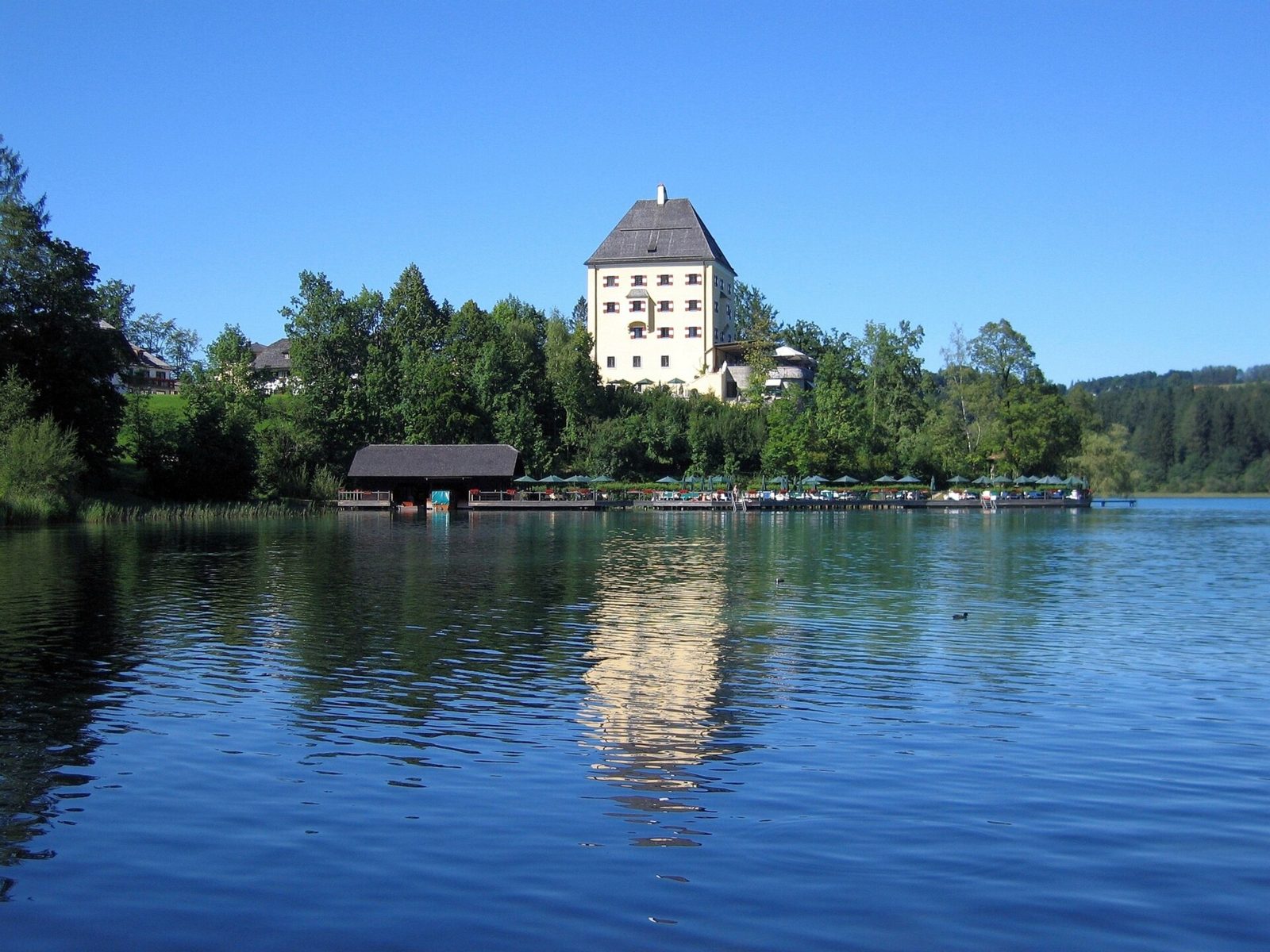
A Hunting Lodge for the Archbishops
Schloss Fuschl stands on a peninsula at the western end of the Fuschlsee, in Austria's Salzkammergut region, roughly midway between Salzburg and Salzburg's mountain hinterland. It was built around 1450 by the Prince-Archbishops of Salzburg, who held both religious and secular authority over the surrounding territory, and who used the castle as a retreat for hunting expeditions in the lake's wooded surroundings. For the archbishops and their court, Fuschl combined the practical function of a hunting base with the standing of a prestige property, set apart from the administrative centre of Salzburg itself and used as a retreat from the demands of governing the archbishopric.
Decline After 1816
The castle's fortunes were tied directly to the political status of Salzburg itself, rising and falling with the authority of the archbishops who had built it. When the Prince-Archbishopric of Salzburg was dissolved in 1816 and its territory absorbed into the Austrian Empire, Fuschl lost the institutional owner that had maintained it for more than three and a half centuries. Without the archiepiscopal court to support it, the castle fell into disrepair, and it would be more than a century before it recovered its earlier standing.
Confiscation and Restitution
By the 1930s, ownership of Schloss Fuschl had passed to Gustav Edler von Remiz. During the Nazi period the property was confiscated from the family, one of many such seizures across the region, and it was only in 1955, a decade after the end of the Second World War, that the castle was formally restored to the von Remiz family.
From Castle to Hotel
The family converted Schloss Fuschl into a hotel during the 1950s, a transformation that gave the building a new, commercial purpose after its long decline. It operates today as a five-star hotel, its historic rooms adapted for guest accommodation while retaining much of the castle's original character. The property also houses art collections accumulated over its history, and a small museum dedicated to the Sissi films, portions of which were shot on location at the castle in the 1950s, adding a further, more recent layer of popular association to its earlier archiepiscopal past.
Schloss Fuschl Today
What distinguishes Schloss Fuschl from many converted castles is the directness of its history: a religious hunting lodge, stripped of purpose by the political changes of the early 19th century, confiscated under a totalitarian regime, restored to its family after years of uncertainty, and finally repurposed as a luxury hotel. Each stage remains visible in different parts of the property, from the older stonework of the archbishops' era to the mid-20th-century additions that turned it into a place for paying guests rather than hunting parties, with the lake itself the one constant across all of them.